
Young People Explore Food Marketing in 10-Week Studio 2 Project
From the moment young people switch on their phones, walk past a billboard or scroll social media, they are surrounded by marketing for food that is often cheap, convenient and unhealthy.
Over ten weeks, a group of more than 30 young people from Derry and Strabane set out to unpack that reality - questioning who influences what they eat, how those messages are delivered, and what impact they have on everyday choices.
The programme, delivered in partnership with Developing Healthy Communities (DHC), focused on understanding the wider systems behind diet and health. Rather than treating food choices as purely individual, participants explored the role of advertising, branding, pricing and digital platforms in shaping habits from an early age.
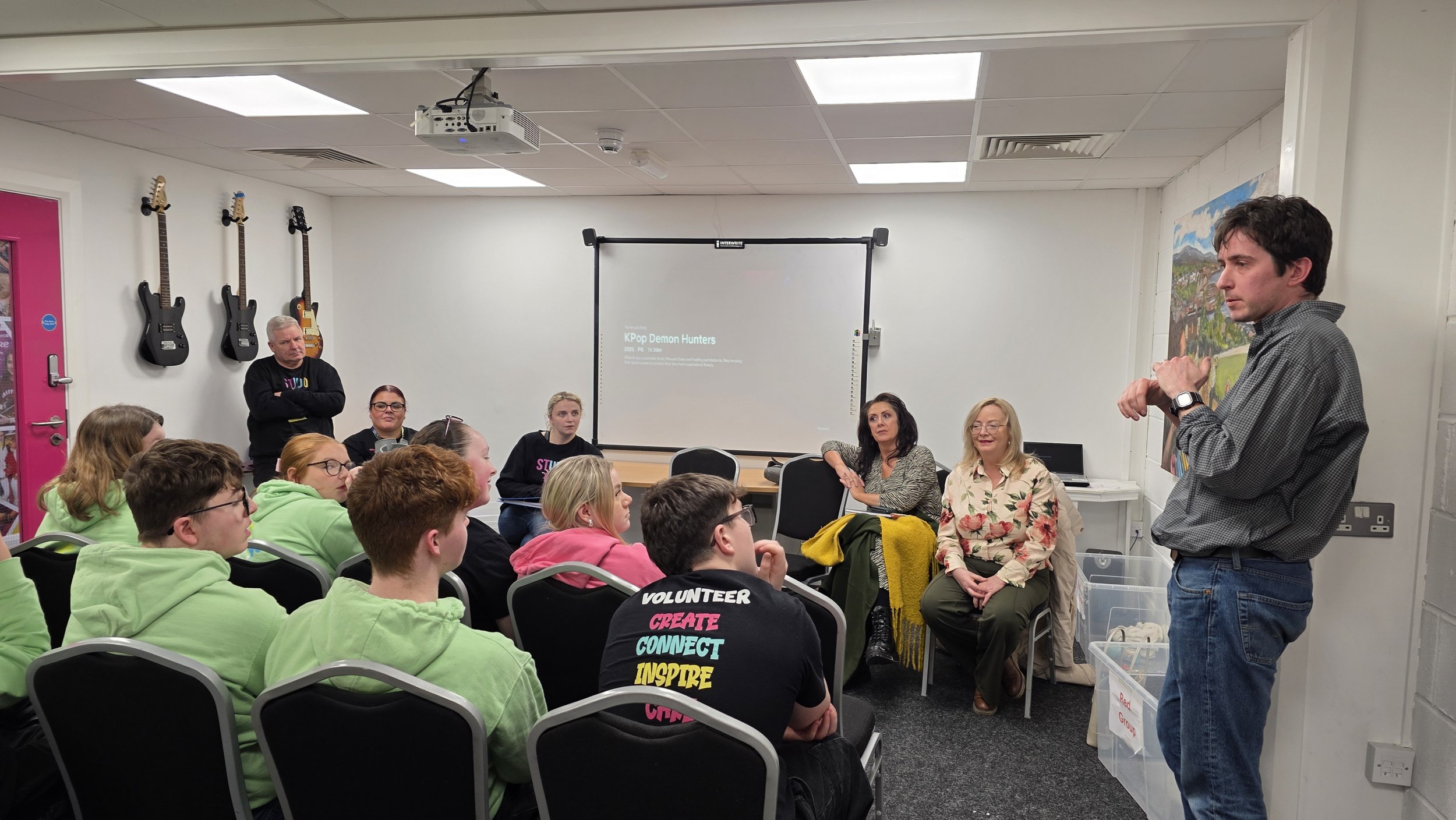
Developing Healthy Communities representatives and Studio 2 facilitators speak with young people during a session as part of a ten-week project exploring food marketing and healthy choices.
A constant influence
For many young people, exposure to fast food and sugary drink marketing is continuous. It appears across TV, social media and in local environments, becoming part of everyday life.
Within that context, the group examined key questions:
Who is really influencing what we eat?
Why are certain foods more visible and accessible than others?
How does diet affect energy, mood and long-term health?
These are not abstract questions. They reflect a wider public health reality, where significant numbers of young people are not meeting basic dietary recommendations, and where healthier options are often less visible, less convenient, or more expensive.
Looking closer at how influence works
A major focus of the programme was breaking down how food marketing operates in practice.
Participants explored how:
Advertising targets attention through colour, placement and repetition
Social media and influencers shape preferences and normalise certain products
Pricing and promotions make some choices feel like the default option
“Healthy” branding can mask high levels of sugar, salt or fat
What emerged is a clearer picture of how these messages are not random - they are designed, tested and repeated until they become familiar.
Over time, that familiarity shapes habits.
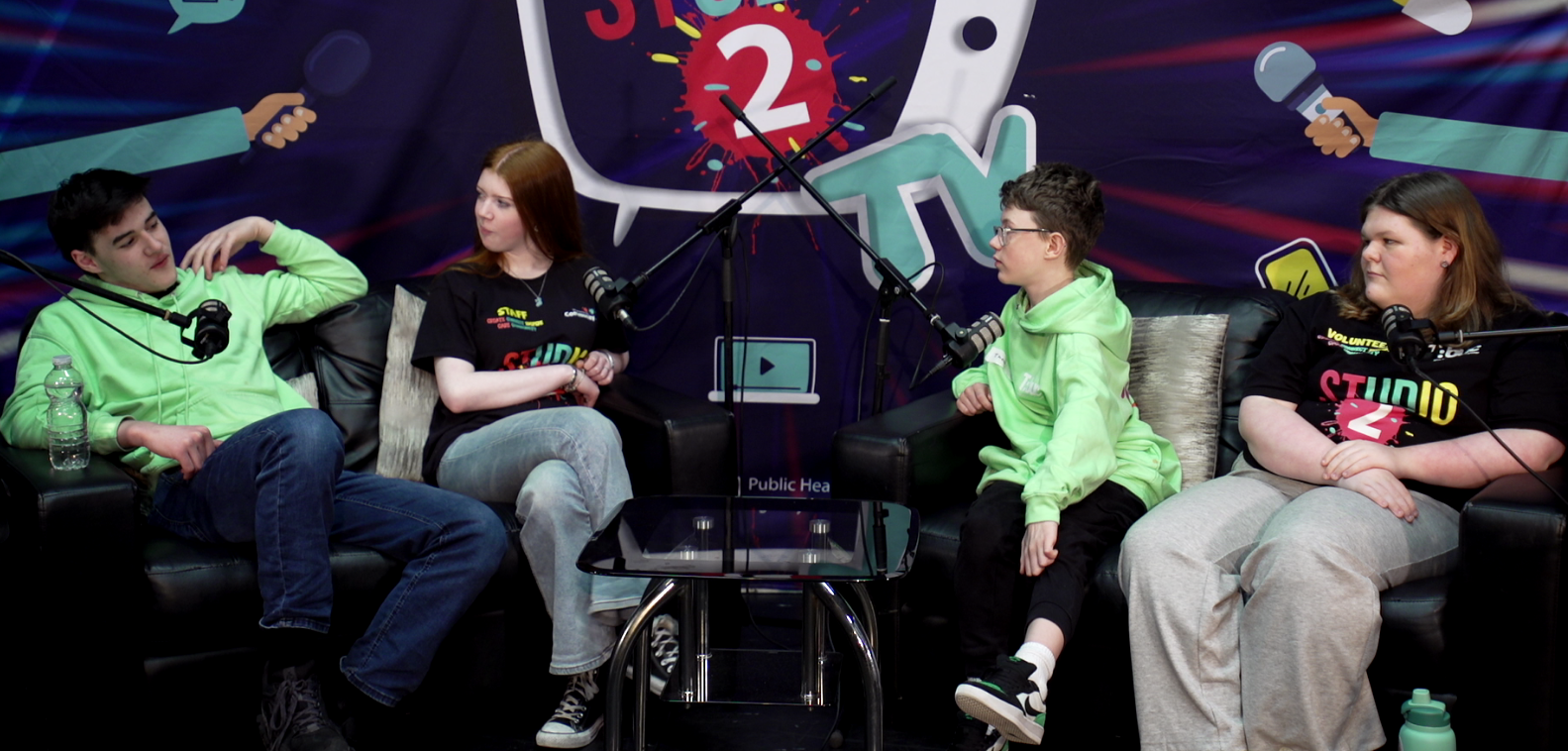
A still from the podcast episode “Biting Back: Taking Control of Our Food,” where young people discuss practical ways to make healthier eating choices within everyday constraints.
From discussion to output
The ideas developed across the programme informed a series of outputs:
Three podcasts, each exploring a different aspect of food, influence and health
A short film focused on the impact of food marketing on young people
A final screening event at the Nerve Centre
Each podcast takes a different angle.
One focuses on influence - who is really shaping decisions and why certain products dominate attention. Another looks at the relationship between food and how young people feel day to day, including energy, concentration and mood. The third shifts towards solutions, exploring what realistic change looks like within the limits people face.
The film brings these ideas together visually, following the presence of food marketing in everyday settings and asking a simple question: how much of what we choose is actually our own decision?
Shifting the conversation
A key theme throughout the project is the shift away from blame towards understanding.
Rather than presenting health as a matter of willpower alone, the work highlights how environments shape behaviour - often in ways that go unnoticed. Fast food is not just available; it is promoted. Certain products are not just visible, they are prioritised.
Recognising that changes the conversation.
It opens up space to think differently about what “choice” really means, particularly for young people navigating busy lives, limited budgets and constant exposure to marketing.
Small changes, real constraints
At the same time, the project does not ignore reality.
Participants spoke about the pace of daily life, the pull of convenience, and the fact that healthier options are not always straightforward. Within that, the focus shifted towards small, achievable changes rather than ideal outcomes.
That includes:
Taking more time to look at labels and question marketing claims
Understanding what goes into food rather than relying on packaging
Finding practical ways to prepare food, even with limited time
Recognising that an active lifestyle is part of the wider picture
The emphasis is not on perfection, but on awareness and control - making more informed decisions where possible.

A still from the project where a young person is speaking about the importance of combining a healthy diet with an active lifestyle, encouraging young people to take part in activities such as walking, football, swimming or dancing.
What emerges
What emerges from the ten weeks is not a single message, but a clearer understanding of the landscape young people are navigating every day.
Food marketing is not just background noise. It is a constant presence, shaping preferences, habits and expectations over time.
By breaking that down, the project creates space for a different kind of conversation - one that recognises both the pressures young people face and their ability to question, challenge and respond to them.
As the podcasts and films are released, that conversation continues. Not as a finished product, but as an ongoing challenge to how food is presented, promoted and understood - and to what a healthier environment might look like if those patterns began to shift.
Thanks to the Public Health Agency and Derry City & Strabane District Council for supporting the project.
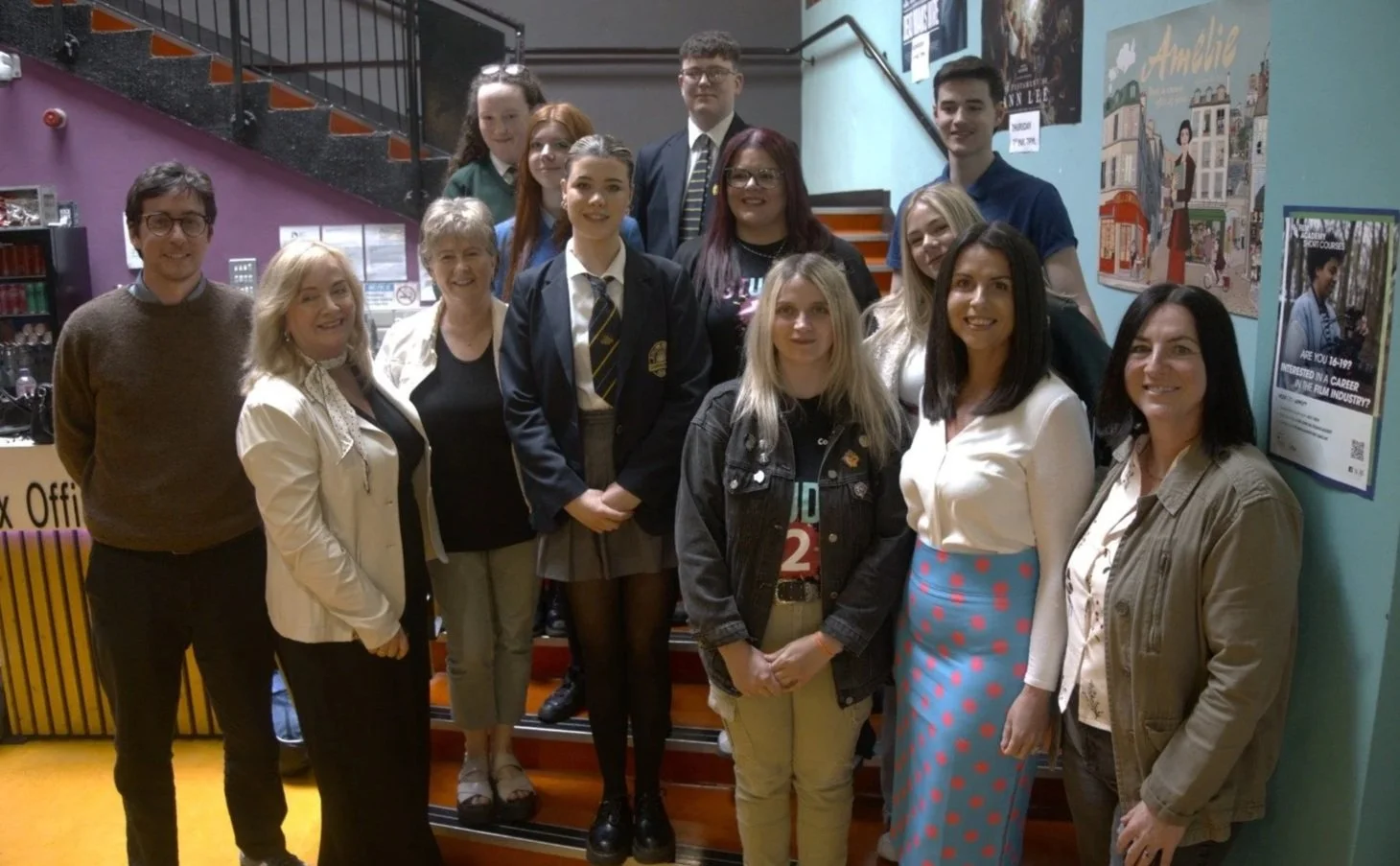
Young people involved in a ten-week food marketing project are pictured with Studio 2 facilitators and Developing Healthy Communities representatives at the Nerve Centre following a screening of their work, which includes three podcasts exploring food marketing and healthy choices.
